Cleaning schedule verification: why the rota isn't enough
General information for UK hospitality operators, not legal advice. If something here is wrong or out of date, the editorial policy explains how to report it.
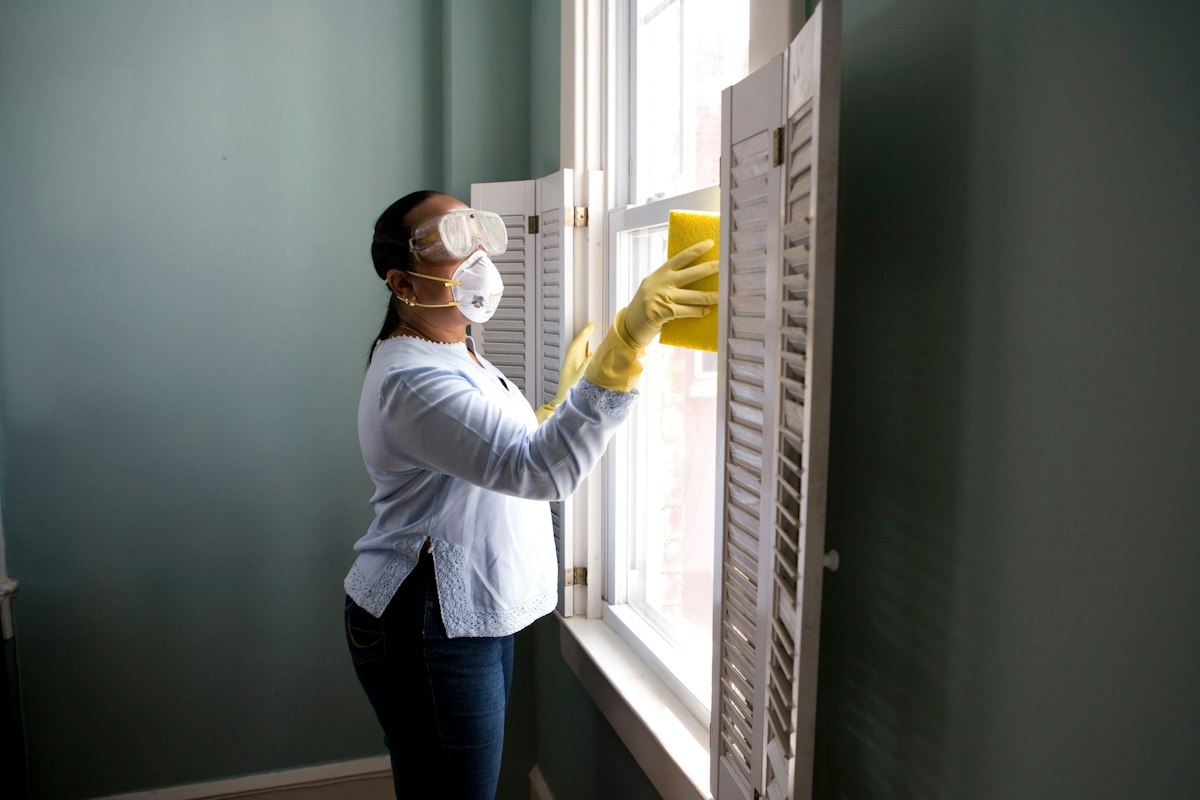
Cleaning schedule verification turns a wall chart into proof: who cleaned what, when, and whether anything was actually missed.
Cleaning schedule verification is what turns a wall chart into evidence: someone checks, dates and signs each task as it is completed, rather than simply displaying the plan and trusting it. Most gaps in a kitchen's paperwork come not from a missing schedule but from treating the schedule itself as if it were the record, when it is only ever the plan.
What a schedule alone can never prove
A cleaning schedule sets out what should happen and how often: daily wipe-downs, weekly descaling, monthly deep cleans of extraction and ovens. It is a planning document, and a useful one, but on its own it says nothing about whether any of it took place on a given day. Guidance built around Safer food, better business diary packs has always asked operators to record completion, not just intention. A schedule with no completion record is a statement of policy, not evidence of practice, and it is common for inspectors to ask to see completion records early in a visit, alongside or before the temperature log.
The confusion arises because the schedule and the record look similar on paper. Both list tasks, both have dates against them, and both hang somewhere in the kitchen where staff can see them. But a schedule printed once and laminated cannot be updated shift by shift, so it stops being a working document the day it goes up. What replaces it, if anything does, is usually a separate sheet or a system where each task is ticked, initialled and dated as it actually happens. Where that second layer is missing, the laminated chart becomes decoration rather than evidence, and a manager who relies on it alone has no way of answering the basic question an inspector will ask: was this done, and who did it.
Cleaning schedule verification: what counts as evidence
Verification means each task on the schedule has four properties: it is assigned to someone, it has a due time or date, it can be marked complete by the person who did it, and a manager can see at a glance what is outstanding. Without all four, gaps appear invisibly. A task assigned to nobody in particular gets done by whoever remembers, or by nobody at all. A task with no due time slips to the end of a busy shift and quietly rolls over to tomorrow. A task with no sign-off might have been done, or might not, and nobody six weeks later can tell the difference. The record that results, whether on paper or in a system built around food safety software, needs to show who did what, when, so a manager or an inspector can reconstruct the last few weeks without guesswork or relying on staff memory.
This matters because the value of a cleaning record is almost entirely in its pattern over time. A single signed sheet proves little on its own; a run of consistent, dated entries across several months shows cleaning is embedded in how the kitchen actually operates, rather than assembled for the day an inspector calls. Guidance on food safety management systems treats records this way: as evidence of an ongoing system, not a one-off exercise carried out to pass a check.
Structuring daily, weekly and periodic cleaning
Most kitchens run at least three tiers of cleaning frequency, and each tier needs a different kind of verification because the consequences of a missed task differ. A missed daily wipe-down is a minor lapse that the next shift will notice and correct without much drama; a missed monthly extraction clean is a fire and hygiene risk that can sit undetected for weeks, building up grease and residue that nobody sees until it becomes a problem. Structuring the schedule by frequency, and matching the verification effort to the risk, keeps the system proportionate rather than a wall of ticks that nobody actually reads.
| Frequency | Typical task | Verification needed |
|---|---|---|
| Daily | Surfaces, floors, equipment wipe-down | Sign-off by the closer or opener, checked next shift start |
| Weekly | Fridge seals, drains, storage areas | Named sign-off with a manager spot-check |
| Monthly or periodic | Extraction canopy, oven deep clean, walk-in defrost | Dated record with photo or contractor confirmation where relevant |
Setting this out clearly also helps with staff turnover, since a new starter can see exactly what is expected of a given shift without relying on whatever the previous person happened to explain verbally.
Sign-off and accountability for completed tasks
Sign-off works best as a two-step process: the person who actually cleaned the surface or the equipment signs or initials it at the point of completion, and a manager reviews the day's or week's outstanding items separately, ideally at a fixed point such as the end of a shift or the start of the next. This mirrors the logic behind other due diligence records in a kitchen, and the same principle applies to due diligence food safety records more broadly: a record only carries weight if it was made at the time by the person responsible, not reconstructed afterwards from memory or filled in retrospectively at the end of a busy week.
Where a task is missed, the record should show that too, rather than simply skip the entry. A record that shows an occasional missed task, followed by evidence it was picked up promptly, tends to read as more credible than one that never varies, since an unbroken run of ticks over a full year invites scrutiny rather than reassurance.
Chemical safety and safe storage as part of the same routine
Cleaning schedules do not sit apart from chemical safety; the two are the same task viewed from different angles. Dilution rates, storage away from food, and correct labelling of decanted chemicals all fall under COSHH guidance, and a cleaning record that ignores which product was used, and how, misses half the point. A cleaning entry that simply says a surface was cleaned tells you less than one that also confirms the correct chemical was used at the correct dilution, and stored correctly afterwards. Many operators build COSHH checks into the same daily routine as cleaning sign-off, which is covered in more detail in a practical guide to COSHH and risk assessments, so that both the cleaning outcome and the chemical handling behind it are recorded together rather than in separate, easily forgotten systems.
Where verification breaks down in practice
The most common failure is not a lack of intention but a lack of visibility under pressure. A deep clean scheduled for a quiet Tuesday gets pushed to next week when a delivery runs late or a member of staff calls in sick, and because nobody is tracking the slippage, next week becomes next month. Extraction systems are a frequent example: they are inconvenient to clean, the consequences of skipping them are not immediately visible, and so they are the first thing to slip when a kitchen is under pressure.
The same pattern applies to walk-in seals, drain traps and anything behind or underneath equipment that is easy to overlook during a normal shift, because these tasks rarely have an obvious visual cue when they are neglected, unlike a dirty floor or a greasy hob that staff notice and deal with without being told. Systems built on paper are particularly vulnerable to this because a missed entry simply disappears into a stack of old sheets, unlikely to be noticed until the sheets are pulled out for an inspection, whereas a system built around digital checklists replacing paper in hospitality keeps an outstanding task visible until it is actually resolved, which is the point of verification rather than simply scheduling.
Keeping the record as strong as the schedule
A schedule tells staff what to do; verification is the separate discipline of proving it happened, and the two need to be treated as distinct tasks rather than one document doing both jobs badly. Building that discipline into daily routine, rather than reconstructing it under pressure when an inspector asks, is what makes the difference between a kitchen that can produce weeks of dated, signed cleaning evidence in minutes and one that cannot. A system built around food safety software keeps the schedule, the sign-off and the record of completion in one place, so a missed task stays visible until it is resolved rather than quietly disappearing until the next inspection.
Frequently asked questions
How often should a deep clean be verified rather than just scheduled?
Any deep clean task, such as extraction canopies, ovens or walk-in seals, should be verified every time it falls due, not just planned for. A schedule that says monthly means nothing if nobody checks the record shows twelve completed entries a year, each signed and dated by whoever did the work.
Who should sign off a completed cleaning task?
The person who actually did the cleaning should sign or initial it at the time, with a manager reviewing outstanding items separately, at the end of a shift or the start of the next. This two-step approach gives a clearer audit trail than a single tick, and is worth adopting whether or not any formal standard requires it.
What should happen when a scheduled clean is missed?
A missed task should stay visible as outstanding rather than disappear once the day rolls over, so it gets picked up before the next shift or the next inspection. Recording why it was missed, and when it was eventually done, is part of the same evidence trail.
Do cleaning records actually help in a due diligence defence?
Dated, signed cleaning records showing a consistent pattern over time are the kind of evidence used alongside temperature logs, supplier checks and training records to demonstrate that reasonable precautions were taken. A single sheet proves little; a run of entries over months carries more weight.
Can a digital cleaning log replace the laminated wall chart entirely?
It can, provided the schedule, the sign-off and the record of completion all live in the same place and are reviewable later. The chart itself was never the requirement; a checkable record of what was actually done is.